Based at Yorkshire Wildlife Trust’s spectacular Spurn Point Nature Reserve, the site gives incredible views over the Humber estuary on one side and across the North Sea on the other. They even have their own lighthouse! The Wilder Humber team are busy restoring native oysters, seagrass, saltmarsh and sand dunes.
Discovering Wilder Humber's seascape project

Oyster spat © Abi O'Leary
Our marine team recently took an amazing trip to Yorkshire where they visited the Wilder Humber seascape project. The project aims to restore marine habitats and species throughout the Humber estuary. Dylan Moses, Marine Project Officer, tells us all about two fascinating days.

Lighthouse © Abi O'Leary
We visited for two action-packed days. On the first day we were helping with native oyster monitoring, and on the second day we were involved in a seagrass seed pick, something that we are very used to doing here at North Wales Wildlife Trust!

Monitoring oysters © NWWT Rhys Bowen
Our first day started with a Jurassic Park-style drive down the beach to the native oyster restoration site. It was a glorious day, and the water was crystal clear. Our aim was to find young oysters and tagged adults, used for continued monitoring, to assess the progress of the oyster restoration. There were so many oysters in the water, every step taken would uncover more and more. Much of the oyster spat (young oysters) were creating mini reefs on the scallop shells. Once all of the oysters were recovered, it was time to take them back to the lab for data collection. The data collected is used to see changes in the quantity, size and mortality of the sample group of oysters.
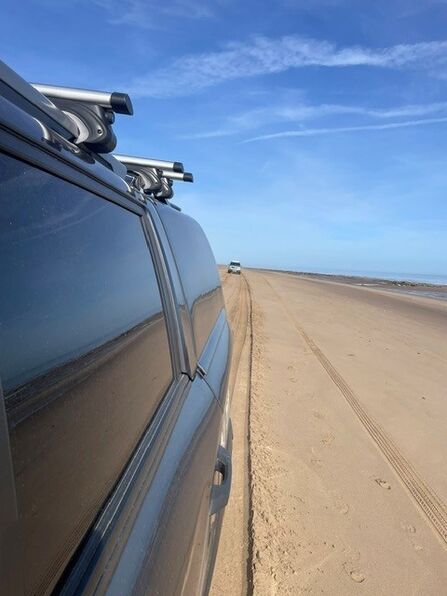
Beach drive © NWWT Dylan Moses
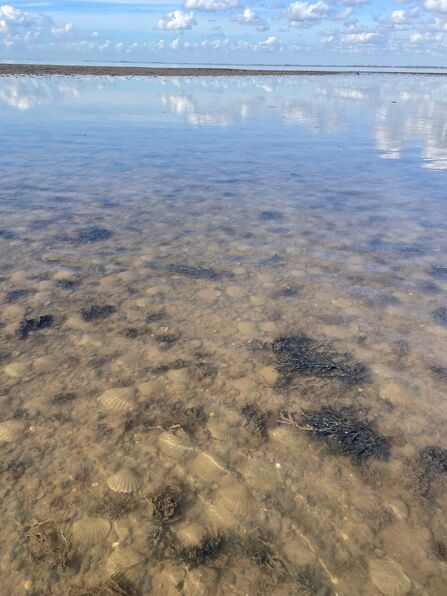
Oysters © NWWT Dylan Moses
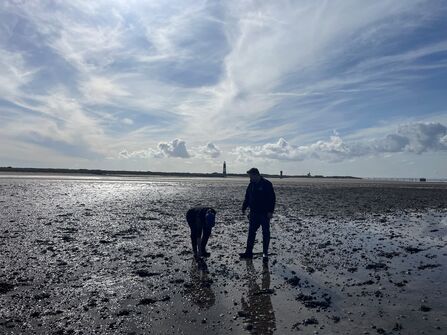
Nia and Andy monitoring oysters © NWWT Dylan Moses
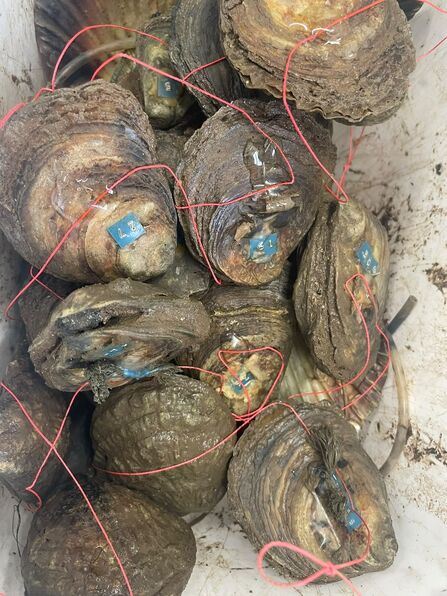
Oyster monitoring © NWWT Dylan Moses
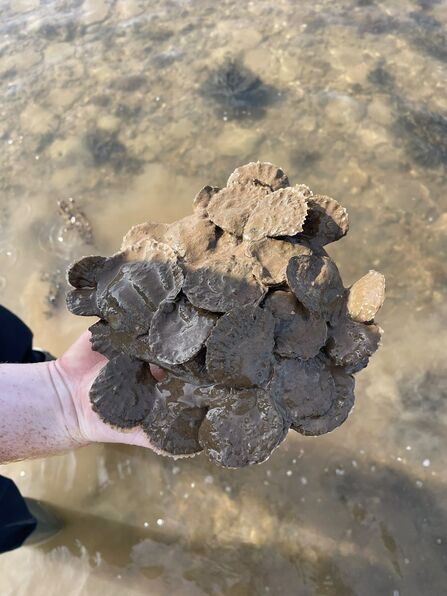
Oyster spat © Abi O'Leary
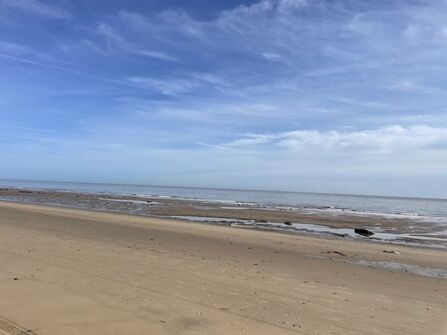
North sea view © NWWT Dylan Moses
The second day started with the same offroad beach drive to the seagrass restoration site. Dwarf eelgrass (seagrass) covered the mudflats in a dark green meadow. Saltmarsh was also weaving in between the seagrass, showing that both habitats are connected (as the word ‘seascape’ suggests). We were given body boards to lie on while picking the miniscule seagrass seeds, so as to not damage the meadow below us. It took a while for those of us new to the seagrass pick to ‘get our eye in‘, but we managed to pick a good number of seeds. The seeds were then put into tanks to allow for the seeds to separate from the leaves. The heavier seeds sink to the bottom of the tank, while the leaves float on the surface when decaying. This is the same technique used with seeds picked from our seagrass meadow in Porthdinllaen. On the journey back to the lab and with the North Sea on our right, the temptation to take the body boards out into the waves was palpable!

Dwarf Eelgrass © NWWT Nia Haf Jones
It is safe to say that our team came back feeling inspired by the incredible work Yorkshire Wildlife Trust are doing. Thank you for being such amazing hosts!