Beyond the Boundary - A creative journey to understanding plants

Beyond the Boundary - A creative journey to understanding plants

How can art help us to learn about nature, and can it help us to understand the threats facing our wilder environments? Our workshops with the Garden Escapers project aimed to explore the answer.

During the course of the summer, and as the colder months crept in, groups of people from North Wales have gathered together to create art. Three artists were tasked with delivering a workshop exploring invasive plants and the landscapes which they can impact. The art events were designed to coincide with our travelling exhibition – Beyond the Boundary: A Case of Garden Escapers. 

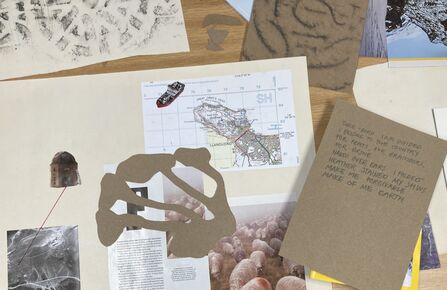
Our first art-based workshop, Nature Notes with Manon Awst, saw participants head up on to the Great Orme - an important habitat known as a limestone grassland which supports a range of significant and rare species. Invasive plants such as cotoneaster horizontalis, a common garden plant, threaten the native flora here, and need to be managed by site wardens to limit their impact of the grassland.

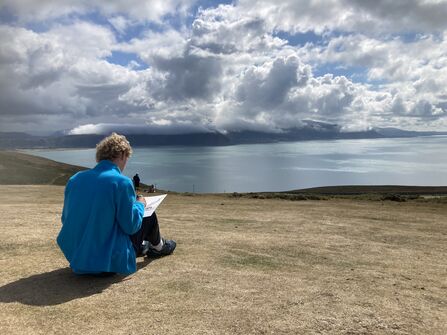
Nature Notes workshop

Nature Notes workshop © NWWT

We met in the visitor center in a small room which hosted our exhibition, now with tables filling the space. Manon gave us a briefing on the afternoon’s activities and we jotted some ideas and drawings down. We then ventured outside on a lovely sunny day to sketch our observations of the landscape. The Orme was bustling with tourists enjoying the stunning views over the sea, and the sound of gulls and corvids filled the air. We spotted harebells and other wildflowers among the grass and smelt a breeze salty with the drifting scent of the ocean. We then headed back inside and collaged, sketched, and wrote poetry about our observations under Manon’s guidance, learning to appreciate the landscape. It highlighted the value of these spaces and what we could lose if they become overtaken with invasive plants.

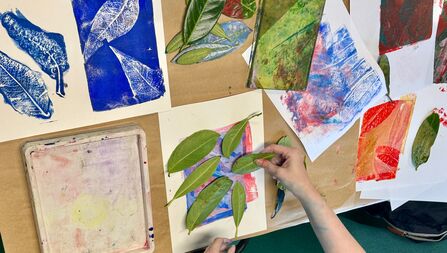
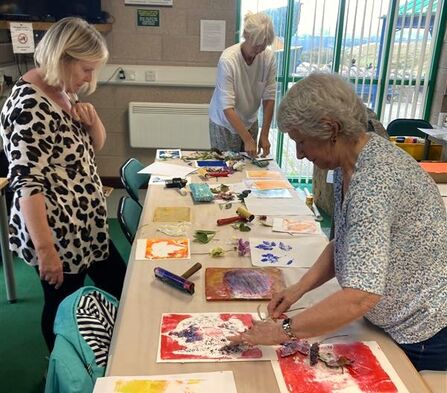
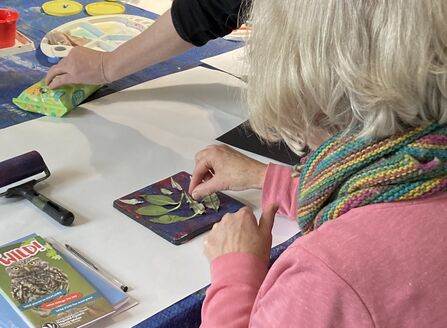
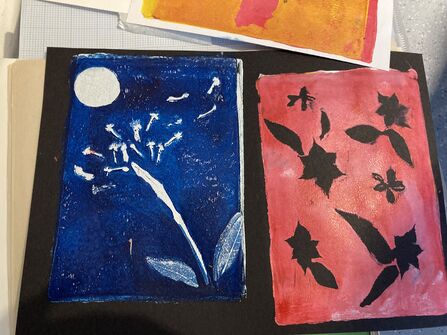
Our next three workshops were hosted by Jŵls Williams and participants were invited to make prints of invasive plants using a technique known as gelli printmaking. Each workshop involved a box of freshly picked invasive species including buddleia and cherry laurel. Whilst the exhibition was hosted on the Great Orme, we explored the impact of invasive plants on the landscape and encouraged people to explore the shapes of the leaves and their flowers as they created layered prints from their shapes. Once the exhibition had moved to its final workshop at Plas Glyn y Weddw in autumn, invasive plants like buddleia had ‘gone over’, but we managed to make use of invasive species such as red valerian which remained in flower even as a chill began to settle in the air. 

Gelli printmaking workshop

Gelli printmaking workshop © Jŵls Williams 

Of course, plants like cotoneaster were now in full berry, and the leaves of Japanese anemone, Himalayan honeysuckle, and rhododendron were easily found in the area. Each participant created their own unique artworks using the leaves and petals of these plants, and every workshop saw different creative results. By working with the invasive plants, feeling the texture of their leaves, examining their shapes and details, and building artworks, people were able to gain a deeper knowledge for recognizing them in their gardens. We also hope it showcased how we can still enjoy invasive plants without needing them in our gardens, or by managing them carefully to prevent their spread.

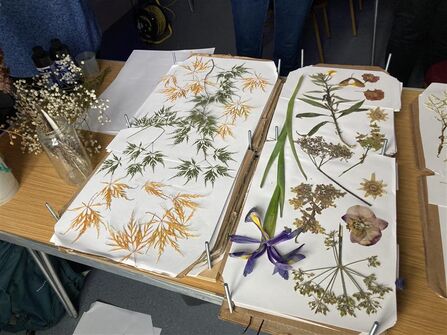
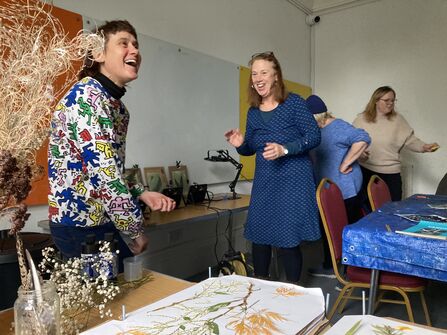
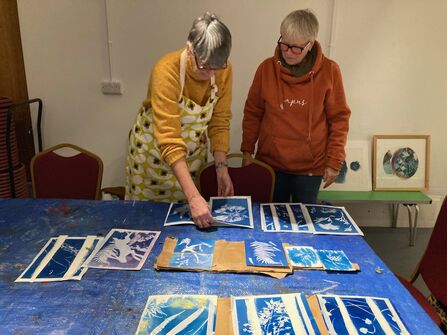
Our final workshop utilised cyanotype, run by Justine Montford from Pitch Black Paradise. Cyanotype has a significant history in botany, dating back to Anna Atkins' Photographs of British Algae (1843) - arguably the first book illustrated with photography. The use of ferns within this workshop related to the work of Nathaniel Bagshaw Ward, a key figure in our exhibition who revolutionised plant transportation. We worked with pressed flowers, leaves, and other organic material to create cyanotype impressions using UV light (we ran this workshop in December so special lamps were used since real sunlight was limited), bringing them to life in stunning shades of white and Prussian blue. Within these impressions, some participants also created artworks involving birds, subtly referencing the ways birds play a significant role in seed dispersal of invasive species. This workshop enabled us to explore the rich history of plants and relate stories and shapes to those we see in our gardens.

These workshops highlight the role of art in helping us connect with different communities, and explore how we can gain a better understanding of the plants that grow in our gardens by studying their forms and learning how to identify them. Art also provides us with ways to enjoy invasive plants, which can be colourful and interesting - one reason they brought to this country in the first place. It shows us that they can be enjoyed without the need to enjoy them in our gardens or by managing them carefully. Art also allows us to appreciate the landscapes we seek to protect through the management of invasive species, and highlights the beauty and significance of our native plant alternatives for sustaining biodiversity. 

Discover more about our exhibition and learn more about how you can help tackle invasive species in your garden.