Paths, trees, new kit, paper work and amazing volunteers at Bryn Ifan

Paths, trees, new kit, paper work and amazing volunteers at Bryn Ifan

Bryn Ifan Project Manager, Dafydd, provides an update on what has been a very busy few months of work toward restoring nature at this 450-acre site near Clynnog Fawr on the northern side of Pen Llŷn, including the precious peatland that is Cors y Wlad.

A big thank you to our volunteers!

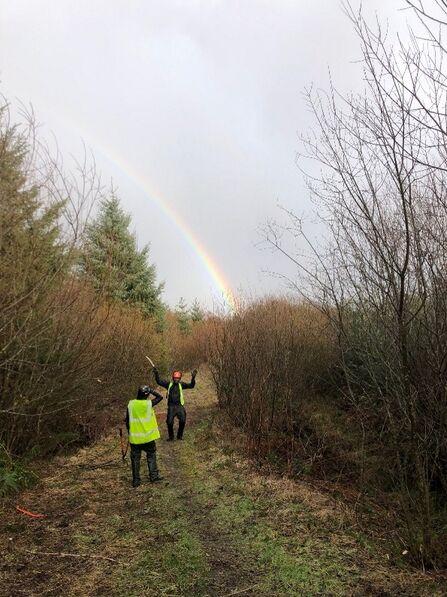
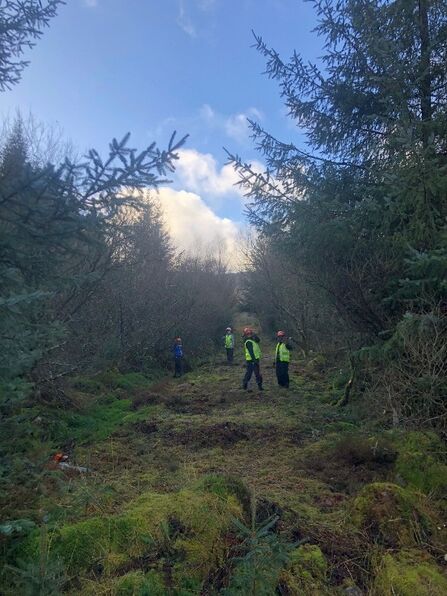
It's been a busy few months and we couldn’t have done much without the great work and support from the volunteers at Bryn Ifan. From clearing paths, fencing, surveying, removing invasive trees, opening up scrubbed up areas and general upkeep and improvements on the farm. Despite challenging weather and some long days, spirits are always high and the volunteers keep coming back!
 

Volunteers in hi-vis and protective clothing working in woodland

NWWT 

We have a new path!

Public rights of way are an important part of the countryside, providing access for walkers, cyclists, and horse riders to explore rural landscapes and connect with nature. Over time, however, paths can become overgrown, damaged, or difficult to navigate due to changing land use, lack of maintenance, or natural processes. Improving and re-opening these routes helps restore access while supporting both local communities and the wider environment. These paths play an important role in encouraging outdoor recreation, improving public health, and helping people develop a stronger connection with nature. 

This was the case with a bridleway that goes through our wetland Cors Y Wlad and leaves our land before continuing through the sitka spruce plantation down to Bwlch Derwin. This path has been unnavigable for many years, working with Gwynedd Council rights of way officer and the AONB we have managed to re-open this path that stretches just under 1.5 miles from the lane below Bwlch Mawr to Bwlch Derwin. Finishing touches of putting in way markers and bridges is now under way thanks to funding from the AONB. 

 This path not only improves access into Bryn Ifan and the boundary of the AONB but also will hopefully work as a corridor for the marsh fritillary butterflies to connect with nearby suitable sites.
 

We’ve been removing Sitka spruce

Across many landscapes in the UK, forests play an important role in supporting biodiversity, stabilising soils, and storing carbon. However, not all trees benefit the ecosystems in which they grow. In some sensitive environments, species that were originally planted for commercial forestry can spread beyond their intended areas and begin to threaten valuable natural habitats. Sitka spruce has been widely planted throughout the UK for timber production because of its rapid growth and adaptability to a range of soils and climates. While these qualities make it highly valuable for forestry, they also enable it to colonise surrounding landscapes. Seeds can travel considerable distances on the wind, allowing young trees to establish themselves in nearby open habitats.

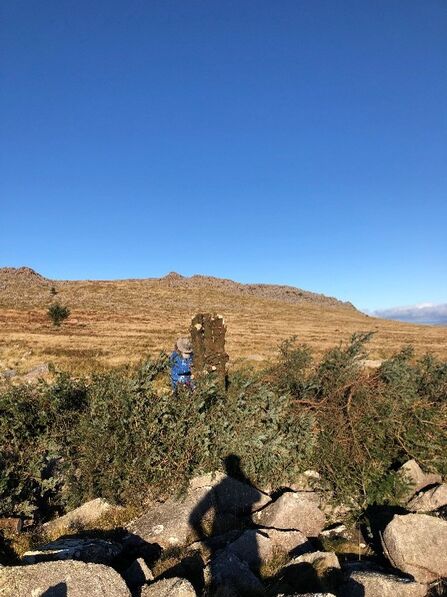
Over time, these self-seeded trees can form dense stands outside plantation boundaries. When this occurs in sensitive habitats such as heathlands, peatlands and species-rich grasslands, it can significantly alter the natural environment. We have been removing trees that have seeded in Cors y Wlad next to the plantation but also high up near the summit of Bwlch Mawr!

 A visit from students from Bangor University’s Habitat Conservation Project

The group visited Bryn Ifan on a very wet and windy Saturday in February. Despite the weather, spirits where high and the work force was brilliant. A lot was accomplished: cutting and clearing scrub around an area from where Bryn Ifan visitors will be able to park and walk into the site; installing a new gate post; clearing fallen trees on a boundary fence and cutting back gorse so it will flower more abundantly.

University conservation work parties are an increasingly important way for students to engage with environmental protection while gaining practical experience in habitat management. University work parties also provide important support for conservation projects. Many nature reserves and habitat restoration initiatives rely heavily on volunteers due to limited resources. 

Involving students in conservation work helps build the next generation of environmental professionals and advocates.

Quad bike and trailer loaded with various reserve management tools with blue sky and white clouds in background

NWWT 

New kit courtesy of Plantlife and Welsh Government 

We’ve had some new bits of kit thanks to funding through Plantlife’s 'Glaswelltiroedd Gwydn Nature Networks Fund' project (funded by the Welsh Government and delivered by the National Lottery Heritage Fund). We bought a seed spreader, ATV roller, trailer, and baskets to put on our quad as well as hay making equipment for our compact tractor. All this new kit with be used to help look after our wild flower meadows.  

And now for the paper work!

Work is continuing to gain the consents we need to be able to carry out our tree planting work at Bryn Ifan. Despite all the challenges we’ve faced we’re starting to see light at the end of the tunnel! While these procedures are quite complex, they help ensure that tree planting is carried out responsibly and in the right locations. Although the process is taking time, it is an important step in delivering a sound, sustainable and well-planned woodland creation project.

Hwyl fawr am y tro, goodbye for now, back to all the fun tree planting consents!