
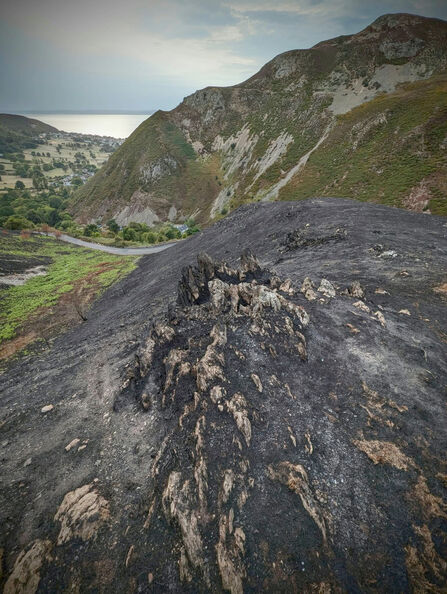
So far this year, thankfully our nature reserves have not been directly affected by wildfires, but the risk remains real and we are on high alert. Sadly, some other very important sites for wildlife have been affected by wildfires, such as the Sychnant Pass in Conwy that was severely damaged by a wildfire in July. Most of this area (109 ha) is designated as a Site of Special Scientific Interest (SSSI) for its dry lowland heathland and the presence of rare Ashworth’s Rustic and Weaver’s Wave moths. It also supports a range of other wildlife including many birds, insects, reptiles and mammals. Sadly, around three quarters of the site has been destroyed by the fire and, while it is too early to assess the impact on the species it supports, we do know that it will take around 15 years to recover, assuming the seedbank within the soil has not been too scorched by the heat. Bracken is often the first plant to recover after a fire and with a tendency to increase in abundance each time, it smothers the regrowth of the heather and gorse that makes the site so special. Fortunately, the fire started relatively late in the bird nesting season, so impacts on nesting birds will hopefully have been minimised.
Our response to wildfires in North Wales

NWWT Lin Cummins
Nature-based solutions to wildfire risk
Reducing wildfire risk can be complex. Decades of drainage and intense grazing causes soil compaction and this has left many habitats less able to retain water and has made them more vulnerable to fire. ‘Nature-based solutions’ are needed, such as re-wetting habitats (for example by blocking ditches); having well-planned grazing to improve habitat diversity; and the planting of native broadleaved woodland with wide hedgerows to provide firebreaks. These kinds of actions also help the land to store carbon and help us to manage water resources better, along with supporting vulnerable wildlife. Our colleagues at Wildlife Trusts Wales are urging Welsh Government to strengthen policies that support habitat restoration and climate adaptation. Long term resilience to the threats of climate change depends on restoring nature on a landscape scale, and we are working with farmers across North Wales to support that aim.
Reducing the risk of fire
Unfortunately, we recently had to contact a homeowner who was lighting fires on property adjacent to one of our reserves. Reducing the risk of fire is an immediate measure we can all take. Top of the list is to avoid introducing any sources of ignition to vulnerable habitats, such as heathlands and grasslands, especially during prolonged dry periods. This includes not smoking nearby, not lighting fires of any kind where sparks may cause a fire, and not leaving glass bottles behind which can concentrate the sun’s rays and cause fires. We need stronger public warnings during periods of high fire risk, with better education about the behaviours that can start fires. People also need to be vigilant and report potential wildfires if they see them – maybe nobody else has!
Find information on how you can help reduce the risk of fire in the wild