'Where hope took root' - some words from Frances Cattanach on her retirement

'Where hope took root' - some words from Frances Cattanach on her retirement

After more than 40 years of remarkable service to wildlife in North Wales, our CEO, Frances Cattanach, will be beginning her hard-earned retirement in May 2026. In her final piece for our members' magazine 'Wild North Wales', she reflects on her time with the Wildlife Trust and the changes she has seen in one place particularly close to her heart – our Cors Goch National Nature Reserve.

It’s a calm early summer evening in the late 1980s. A light wind is gently rattling the curtain of reeds. As I track the margin of Cors Goch fen, the squelchy peat underfoot releases the antiseptic aroma of bog myrtle, and I’m lifted by the joy of spotting the little brick-red spikes of early marsh-orchids. As I walk home to Penllyn – the Wildlife Trust’s next-door farmhouse – I’m caught by a movement low over the fen: a hawking barn owl silently seeking its supper.

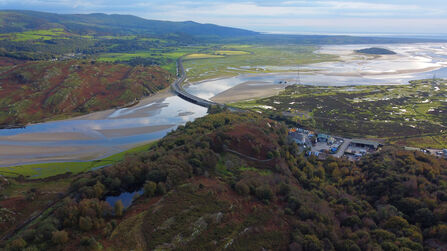
Cors Goch is so special that it’s a National Nature Reserve – but it’s also the birthplace of North Wales Wildlife Trust and, personally, very close to my heart. On reflecting on my life with the Trust, the changes it has felt and witnessed are crystallised here. Like so many places where wildlife finds a refuge, it’s sensitive to societal demands: its hollowed form, layering eons of peat, was thought handy as a dumping ground for landfill, but was bravely fought off by our insightful founders. Later, we held at bay limestone quarrying threatening to suck the water from its arteries.
 

Barn owl

Jon Hawkins - Surrey Hills Photography

Less positively, over time, the insidious drip of agricultural intensification has soured the cradle which nursed the fen. A gently hued landscape was made bright green, lost its wild, rich tapestry, and doused the fen with a chemical cocktail it struggles to repel. The rippling call of the curlew, the squeal of the lapwing and the jewel-like marsh fritillary butterfly are here no more. It’s galling, not just in wildlife’s own right but because this gloriously spongy filter has the power to serve us – with improved sewage outfalls in Benllech, Cors Goch can support blue flag bathing and the health of the wonders of the Menai Strait and Conwy Bay beyond.

Our ambition for bigger, better and more joined-up wild places, such as Minera Quarry, Gwaith Powdwr and Bryn Ifan, has seen us bring wonderful wildlife to countless visitors.  At Cors Goch, to augment the fen, we have added, heaths, wetlands, hazel woods and limestone grasslands; Craig Wen, Cors Castell, Rhuddlan Fawr, Nant Newydd. Meanwhile, across the region, we increase connectivity through sensitive road verge care – summer clouds of meadowsweet grace nearby verges around Llanbedrgoch.   
 

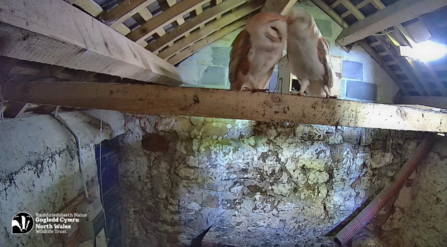
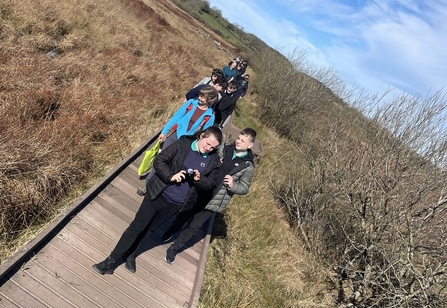
When I started, I used a pen and paper. The digital revolution has transformed how we inspire and encourage anyone with a vague interest in the natural world to care and act. We share photographs, film and art: telling bilingual stories about the culture and wild richness of North Wales, always reminding of our place as part the natural world.  Today’s ‘Corsydd Calon Môn’ project in the Anglesey Fens connects people to places and our barn owls in their box are now video stars.  Through our support for Canolfan Addysg y Bont in Llangefni, young people are growing their own food and learning about their special local wild places.  People recount their own tales, too, and we’re told of a farmer who lost control of his 8 oxen and drove them into Llyn yr Wyth Eidion. 

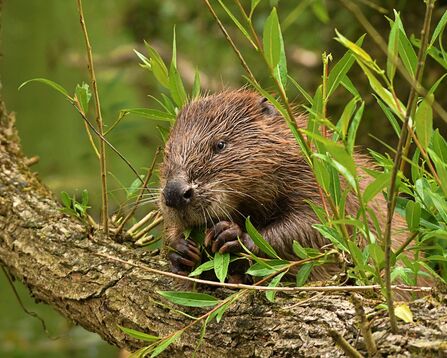
It’s mid-winter and frost is etching every leaf. In the eighties this was prime raptor spotting time. The distinctive ring-tail, the female hen harrier, or the lolloping flight of a marsh harrier. Now buzzards are common, and increasingly red kite. The novel sight of a red squirrel dashing amongst the hazel coppice brightens any day. Reintroductions are now part of the species recovery armoury. Pine marten, sea eagle, and our own efforts to reintroduce beaver to Wales. 

The biggest and most long-overdue change, and glimmer at the end of the tunnel for wildlife in Wales, is the shift away from agricultural intensification.  The world-leading Well-being of Future Generations Act in 2015 paved the way for today’s Sustainable Farming Scheme, which could super-charge wildlife’s recovery across swathes of land.  Our part is being played through our Galwad farm advisory service and gives me the greatest hope for nature.  Meanwhile, our Corsydd Calon Môn, Alun & Chwiler and Conwy Valley Living Landscape projects rehearse our ambitions. 

Cors Goch is now feeling climate change. Extreme weather increases risk of fire sweeping across the wetland – but last year we counted more marsh gentians than ever before.  Long periods of wet weather may even be doing them a favour, but a healthy fen can both ease the effects of climate change and experience the pain.

Frances Cattanach, NWWT CEO

Together with our growing partnerships, our 10,000 members, our committed and talented volunteers and staff, North Wales Wildlife Trust stands strong with our natural world.  I am so proud to have been a part of its ongoing wild journey. 

And finally…

We’d like to thank Frances for her many years of dedicated leadership. After more than 40 years of remarkable service to wildlife in North Wales, Frances will be beginning her hard-earned retirement in May 2026. We’ll give a proper welcome to our incoming CEO, Lindsay Thomas, over the coming months, but if you would like to read a little more about her, why not visit our news page?