Surveying for dormice in North Wales

Surveying for dormice in North Wales

Hazel dormouse © Terry Whittaker/2020VISION

Our Reserves Officer, Paul Furnborough and a team of volunteers, with support from dormouse ecologists, have been carrying out dormouse surveys over the summer to monitor populations of this protected and priority species.

Dormice are rare and declining in the UK, concentrated mostly in southern England. In North Wales populations are generally small and scattered. North Wales Wildlife Trust and Enfys Ecology are privileged to work on several of these rare populations, including a long-term monitoring programme at Coed Fron Wyllt (Bontuchel) and a new programme started last year around Dolgarrog in the Conwy Valley. We also resumed monitoring at our Ddôl Uchaf Nature Reserve a few weeks ago following a seven-year hiatus.

At Ddôl Uchaf the aim is to establish if the population is still present on the reserve. If they are present, we will focus our habitat management to best support this species; if they are not we will seek permission from neighbouring landowners to monitor nearby locations at which they were previously recorded, and will assess the connectivity between these sites.

Y Ddol Uchaf Nature Reserve

Y Ddol Uchaf Nature Reserve

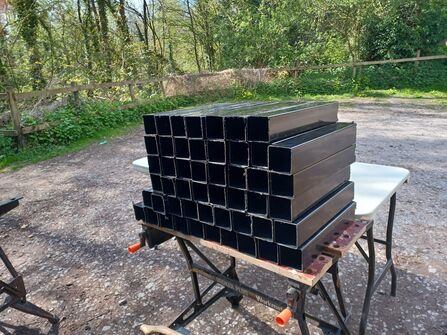
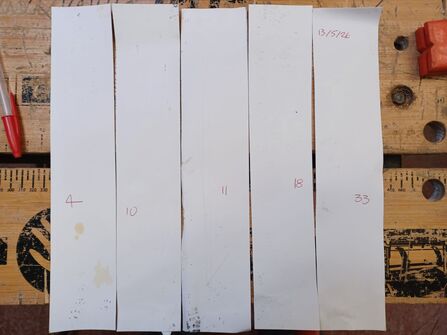
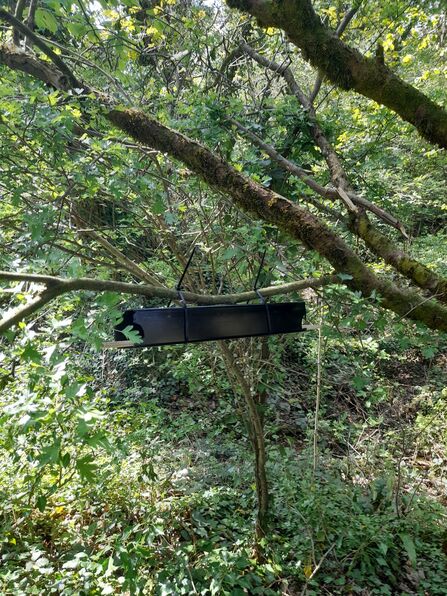
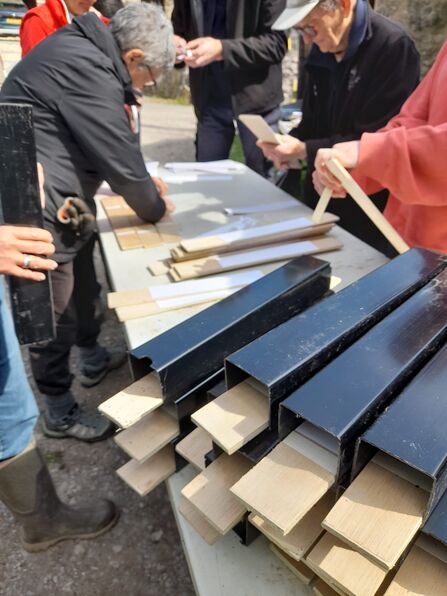
The most efficient method for confirming presence or absence of dormice is the use of footprint tunnels. These are a simple square downpipe with a sheet of plywood extending out at either end as a landing pad, and card to capture the prints inside the tunnel. The tunnel protects the pad from the elements, and motivates these curious creatures to pass through it. At either end we paint on a strip of ‘ink’ – a mix of fine pharmaceutical grade activated charcoal powder (deemed safe for dormice) mixed with olive oil.

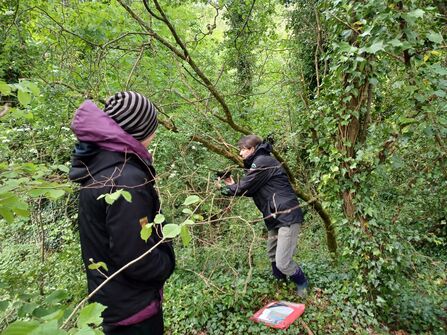
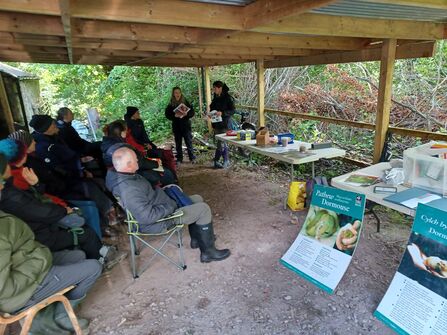
Our volunteers have built these monitoring tunnels, assembled and then deployed them in transects across the reserve. We are delighted to be supported by experienced ecologists from Enfys Ecology, our ecological consultancy subsidiary who have provided initial training in identifying footprints and nibbled nuts, and selecting suitable locations for setting up these tunnels. They are also providing ongoing support to confirm any potential dormouse footprints as we collect our weekly data.

This is a relatively new technique, first experimented with in 2016 and refined more recently. Studies have shown that it is possible to achieve a 97.5% probability of detection in sites with very low dormouse density; this means that we can be confident that not finding any dormouse footprints indicates a true absence.

The other big advantage of this method is that it does not cause disturbance to the dormice, so the survey does not need to be carried out under a species licence from Natural Resources Wales (NRW), and this allows the work to be done independently by volunteers. This contrasts with checking of nest boxes and nest tubes, which could disturb any dormice present and thus requires a dormouse monitoring licence.

The advantage of nest box monitoring is that it enables you to get much stronger demographic data: how many baby mice are born in each litter and how much they weigh etc. They can also be micro-chipped, allowing the same individuals to be monitored over multiple years. The team at Enfys Ecology include specialist dormouse ecologists who are fully-licenced and have experience of this type of work, but it’s beyond the scope of our initial project at Ddôl Uchaf.

As footprint tunnels are a presence/absence survey, as soon as presence is confirmed, we can halt the survey. It’s quite high intensity – at Ddôl Uchaf we are checking the tunnels every week, replacing weather-worn or slug-damaged papers, as well as any covered in non-target species prints: mostly wood mice, voles, squirrels and birds. This makes it easier for us to ID the prints we get, without the paper panels becoming too ‘busy’ with lots of overlapping footprints.

Hazel dormouse

©Danny Green

Even if successful, we will most likely continue with our surveys for a while longer at Ddôl Uchaf for several reasons. Firstly, it will give us more confidence in having correctly identified the footprint as dormouse. Secondly, it will give us, as a survey team, more experience of setting and checking the tunnels and assessing the footprints. And thirdly, additional records from other locations across the reserve might give some indication of their local distribution and habitat use.

We will keep you posted on how our surveys go over the coming summer months – and come autumn we’ll introduce you to the ‘Dormouse Nut Hunt’ - an exciting companion survey method to the footprint tunnels.