

Our River Wellbeing Project Officers providing biosecurity services for British Canoeing at a national paddling competition ©Paul Jepson
Biosecurity
Help stop the spread of Invasive Non-Native Species
What is biosecurity?
Biosecurity is a set of actions that we can take to prevent the spread of invasive non-native species (INNS), pests or harmful pathogens. Biosecurity focuses on prevention, which is by far the most effective way of tackling the impacts of INNS.

Why is biosecurity important?
Invasive non-native species can cause huge amounts of damage to the environment, they can also have negative effects on our economy and health. Find out more about the issues they cause here.
Once established in an area, INNS are difficult to manage; they cost time and money, with the UK spending around £2 billion annually. Preventing their spread is vital to stop more damage taking place.
How do invasive species spread?
INNS spread through several methods: animals will breed and travel, whilst plants can spread through seeds or other plant material. Fragments can travel through waterways, and through air, or with the help of animals (such as birds depositing seeds from berries). However, not all spread is natural. Human activity can also spread these species. Boats, fishing equipment, and even our pets, can pick up seeds and spread them to new areas.
What can you do?
Rivers, lakes, reservoirs and canals are a huge draw for leisure activities such as walking, angling and paddling. These areas are also very vulnerable to invasive non-native species because of their connectivity - be it by the water that flows through them, or by the visiting.
The most important thing you can do to help Stop the Spread of non-native invasive species is to follow the three simple biosecurity steps of Check Clean Dry every time you are out in the countryside.

Check Clean Dry © GBINNS
- Check your clothes and equipment after leaving water or on wet ground for mud, aquatic animals, and bits of plants. Remove anything you find and leave it on site.
- Clean everything thoroughly as soon as you can, paying attention to areas that are damp or hard to access. Use hot water if possible.
- Dry everything for as long as you can before using again. Some invasive species can live up to two weeks in damp conditions!

Walkers
Before you go home, use a boot brush or our boot cleaning stations (see below) to get in between the tread of your boots and wash away any dirt with fresh clean water on to hard-standing ground, gravel or grass. Don't allow any dirty water to enter the water course or sewers. Make sure to check clothing (such as velcro, zips or turn-ups on your trousers) that could trap plant or animal material.
Your four-legged friends can also carry plant material on their fur and paws so don’t forget to give them a wash down too!
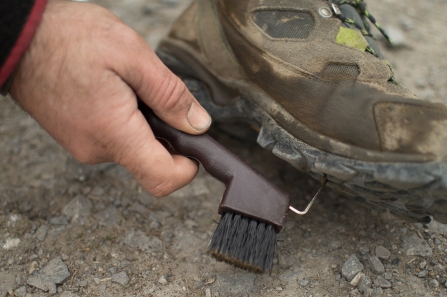
Scrub those all-important hard to reach places, such as the treads on the bottom of your boots © Original Outdoor Media
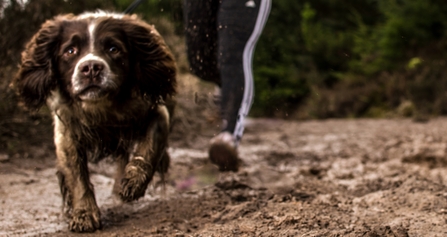
Even our pets can transport invasive non-native species on their fur and paws ©Original Outdoor Media
Anglers
Take advantage of any biosecurity facilities that are on site before you leave. If there are no facilities, when you get home wash down all of your kit with clean water on either gravel or a hard surface. Make sure no dirty water can enter the water course or sewers. Pay particular attention to hard-to-reach parts of your kit. Drain your boat and leave all kit to dry thoroughly before next use.
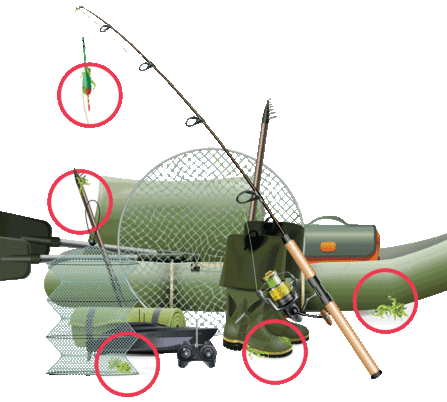
©GBNNSS

© NWWT
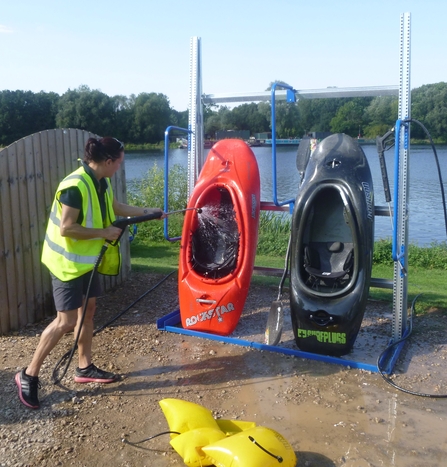
Paddlers
Take advantage of any biosecurity facilities that are on site before you leave. If there are no facilities, when you get home wash down all of your kit with clean water on either gravel or a hard surface. Make sure no dirty water can enter the water course or sewers. Pay particular attention to hard-to-reach parts of your kit. Drain your boat and leave all kit to dry thoroughly.
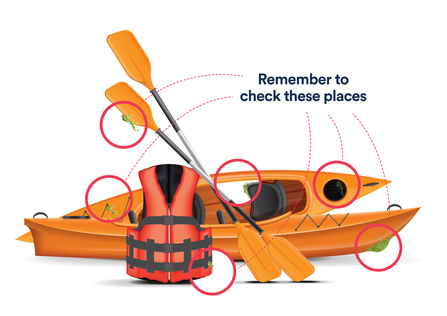
©GBNNSS
© NWWT

Biosecurity boot cleaning station at Tŷ Mawr County Park, lower carpark ©NWWT
Biosecurity cleaning stations
To encourage more people to practice biosecurity, our INNS team has installed biosecurity boot cleaning stations at Park in the Past in Hope, Alyn Waters Country Park, Tŷ Mawr Country Park, and on the Offa’s Dyke Path by the Boat Inn in Erbistock. Smaller versions are now being installed at many of our nature reserves.
Simply run your footwear over the brushes back and forth until all the mud and debris has been removed (please be nice and don’t use it for dog muck). If you have access to clean water (tap or bottle) be sure to rinse off anything remaining. Once cleaned thoroughly, leave your footwear and any other kit that has come into contact with the water somewhere they can dry out completely before using again.