Exploring hidden worlds at Gwaith Powdwr Nature Reserve

Exploring hidden worlds at Gwaith Powdwr Nature Reserve

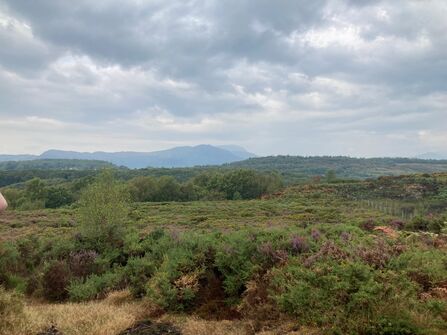
Heathland at Gwaith Powdwr © NWWT Ellen Williams

On a drizzly day at the end of summer, our youth forum headed to Gwaith Powdwr Nature Reserve to uncover hidden wildlife across the reserve.

After weeks of hot and dry weather, our youth forum arranged to explore the reptiles at Gwaith Powdwr Nature Reserve with the reserve volunteers, Mike and Lydia. With plenty of basking spots and heathland providing the ideal habitat for snakes, slow worms and other reptiles we chose a date at the end of August and headed over to the nature reserve. 

Of course, you can’t control the weather and wildlife doesn’t follow a schedule! As luck would have it, the day we’d arranged turned out to be a drizzly Wednesday morning – not ideal for spotting reptiles, which are much more likely to be out in warm and dry conditions. Thankfully, our youth forum members weren’t deterred by the weather and everyone arrived ready to explore the reserve.

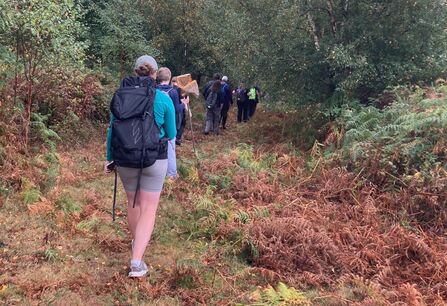
Luckily for us, Mike and Lydia were prepared with Plan B. They taught us some tips and tricks for surveying reptiles, including wearing dark clothes, being as quiet as possible (ideally no more than two people would survey an area at once) and always making sure to wear thick gloves to avoid possible bites to your hands! Mike told us how he and the other volunteers survey for reptiles by checking under felts and corrugated roofing tiles which have been placed around the reserves. They act as artificial rufugia (warm, safe shelters) for the reptiles which makes it easier to count them reliably.

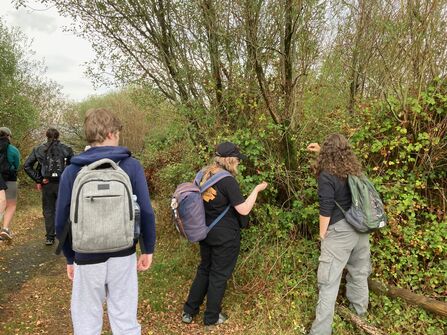
Checking under the felts for reptiles at Gwaith Powdwr

Checking under the felts for reptiles at Gwaith Powdwr © NWWT Ellen Williams

We accompanied Mike and Lydia on a walk around the reserve, and had a go checking under the felts for any reptiles that may have been sheltering underneath. Although we predictably didn’t have luck spotting any, Mike did point out the indents in the grass that showed snakes had been spending time under these felts.

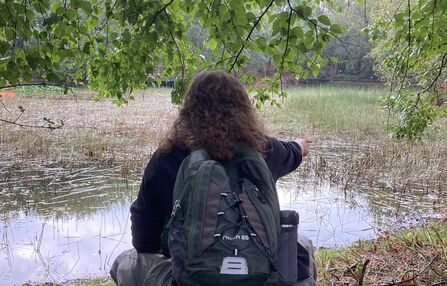
Next, we headed to a hidden pond where grass snakes had been known to swim. After the recent hot weather, the edge of the pond had receded quite far back, so we crept though the ferns and under the cover of young trees up to the water’s edge. We kept a close eye on the pond vegetation, but it appeared that the wildlife was sheltering from the rain (or perhaps had heard out large group coming!). After watching quietly, we were however rewarded with the sight of an emperor dragonfly pacing along the pond’s edge right in front of us, and we could see its bright blue and yellow colours.

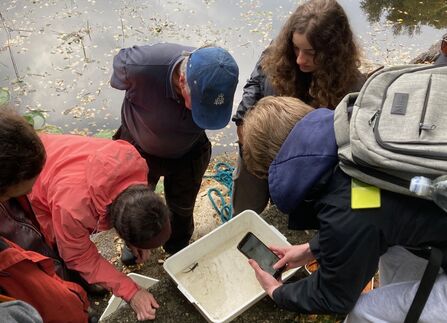
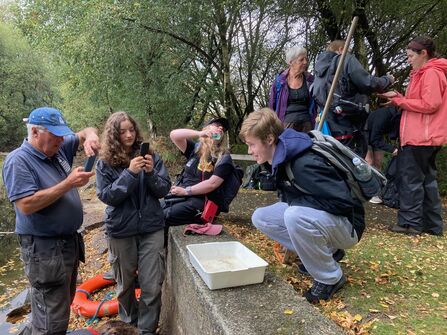
Next, we headed over the smaller pond on the reserve, stopping along the way to admire the amazing views over the Dwyryd estuary and snack on some early blackberries growing on the bushes. Mike had brought along some pond dipping equipment and we had a go at seeing which species we could find in the pond with the goal of perhaps finding a newt. 

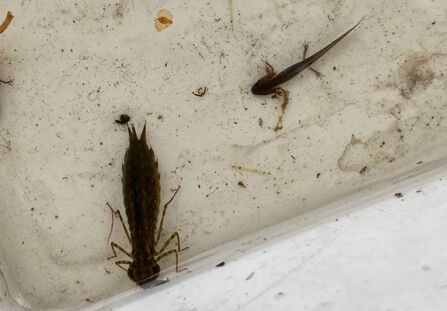
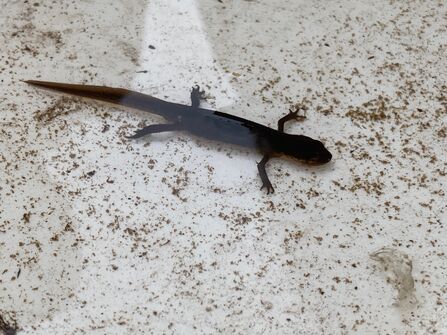
Pond dipping proved to be much more fruitful and we found all kinds of creatures that had been hidden under the ponds surface! We spotted water boatman, a dragonfly nymph and newt tadpoles. Perhaps the best find of the day was made by Aled, one of youth forum members, who managed to uncover an adult palmate newt! 

We were all very excited by this discovery and gathered around to admire it. Mike pointed out to us that the easiest way to identify palmate newts is by their webbed feet and plain, unspotted pink or yellow throat, but that outside of breeding season they lose the webbing on their feet.

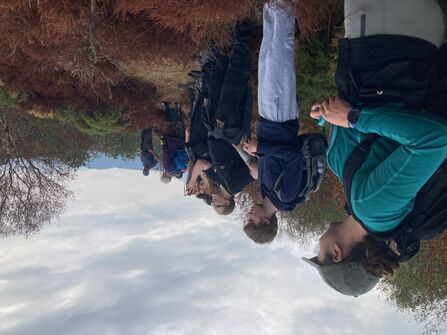
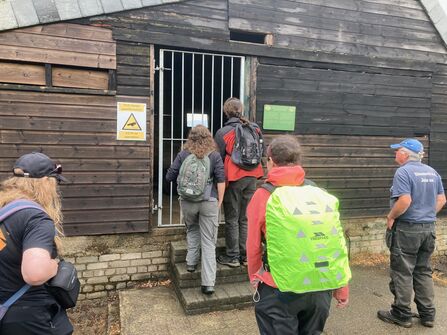
After we’d returned all the creatures to the pond, we headed back up hill for a quick look at the pendulum shed. The nature reserve used to be an explosives factory, and a number of the buildings from the factory works remained on the site. Behind the shed was a vast landscape of heather and gorse – a wonderful sight even in the rain! 

Despite the fact that the day hadn’t gone as we’d originally planned, we still managed to discover and learn about the animals living on the nature reserve. Whether it was finding hidden signs of snakes in the indents of the grass, waiting patiently and seeing insects emerge from hiding, uncovering wildlife beneath the surface of the pond or discovering the hidden history of the site, each experience uncovered something unexpected. It was a great reminder that wildlife can often be hidden from us, but if you know where to look and are willing to put in a bit of extra time and effort, you can discover all kinds of amazing things!

Youth forum at Gwaith Powdwr Nature Reserve

Youth forum at Gwaith Powdwr Nature Reserve © NWWT Ellen Williams